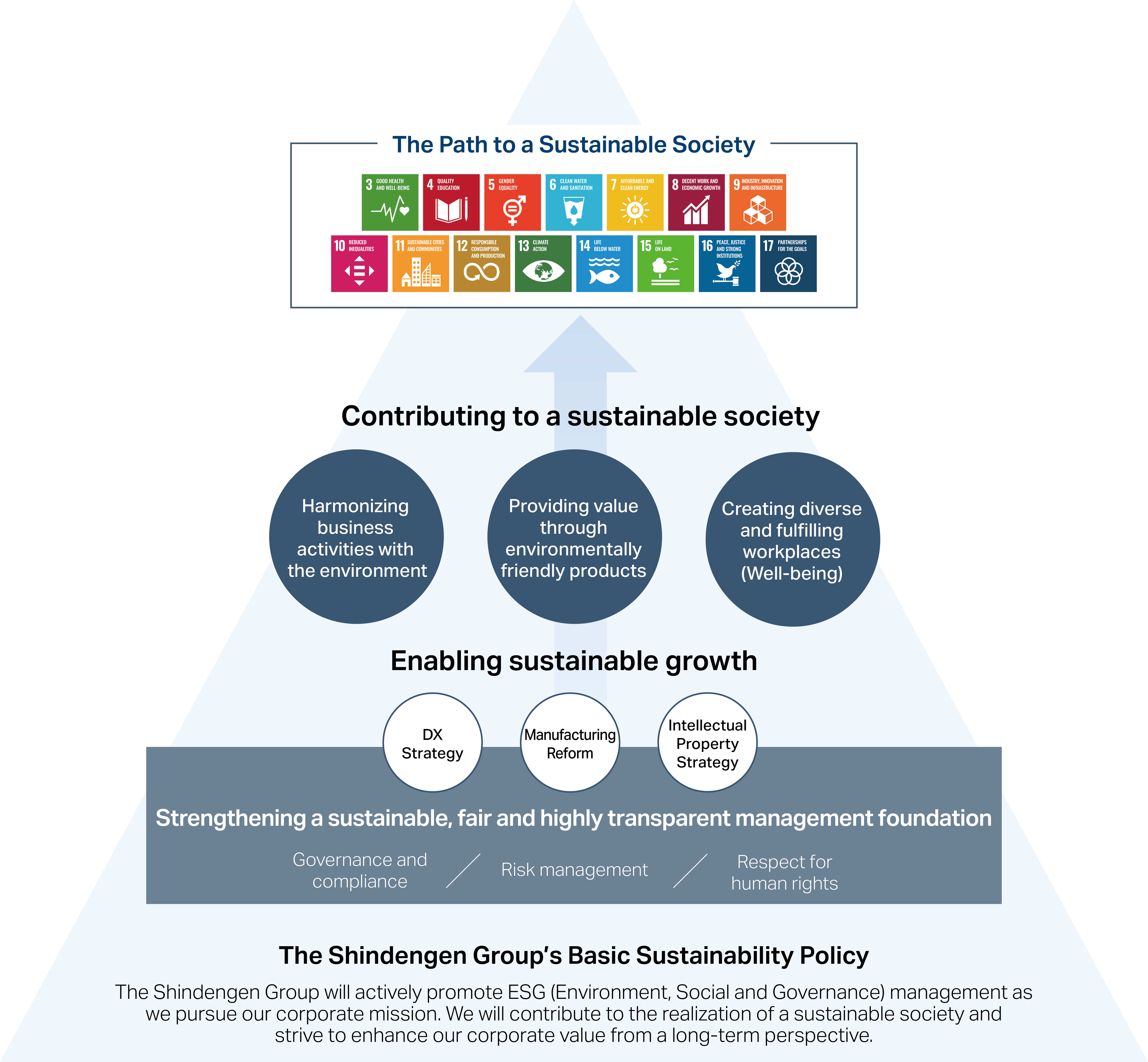
The Shindengen Group has reviewed its Sustainability ESG Material Issues for its 17th Medium Term Business Plan (FY2025-FY2027) by identifying key social issues that are material to the Group from the perspective of sustainability. The four identified ESG Material Issues are classified into two categories: (1) those that enable sustainable growth and (2) those that contribute to a sustainable society. The first category includes “strengthening a sustainable, fair and highly transparent management foundation,” while the second category includes the remaining three key issues: “providing value through environmentally friendly products,” “harmonizing our business activities with the environment,” and “creating diverse and fulfilling workplaces.”
For the three material issues that contribute to a sustainable society, the Group will establish medium- to long-term targets and report on their progress.
Our Process
In our group, when identifying materiality (key issues), we follow the process outlined below, select the items accordingly, and finalize the decision upon obtaining approval from the Sustainability Committee.
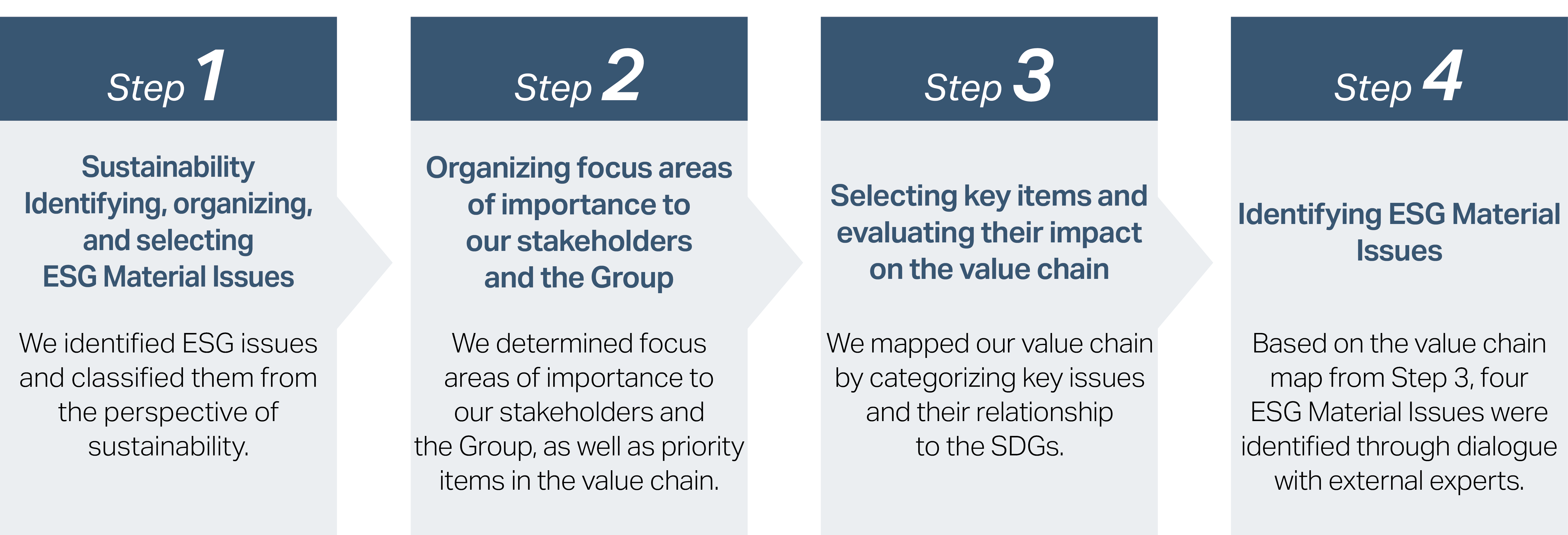
Step 1: Extraction and Organization of Sustainability Issues
Based on the 17th Medium-Term Management Policy, we reviewed and reorganized the ESG (Environmental, Social, and Governance) issues we have been addressing from a sustainability perspective.
Global standards referred to: GRI Standards, SDGs, ISO 26000, SASB, OECD Guidelines, the Ten Principles of the United Nations Global Compact
Step 2: Prioritization
For the extracted sustainability issues, we conducted examination and analysis from two perspectives: ‘impact on stakeholders’ and ‘importance to the Shindengen Group,’ and organized the areas that should be prioritized for action within our company.
Step 3: Evaluation of the Value Chain
By applying the priority areas determined in Step 2 to our value chain, we narrowed down the list to 16 key issues. Furthermore, we organized the relevance of each issue to the SDGs (Sustainable Development Goals) and created a value chain map.
Step 4:Determination of Materiality
Based on the value chain map organized in Step 3, we gathered opinions through dialogue with external experts and, after deliberation by the Sustainability Committee, identified the materiality (key issues) for our group.
| ESG Material Issues | |
|
Contributing to a sustainable society |
Providing value through environmentally friendly products |
| Harmonizing business activities with the environment | |
| Creating diverse and fulfilling workplaces (Well-being) | |
|
Enabling sustainable growth |
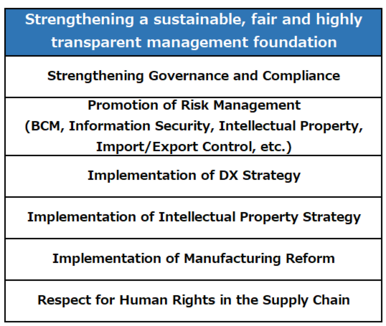
Strengthening a sustainable, fair and highly transparent management foundation |
Value Chain Mapping and Its Relationship to the SDGs
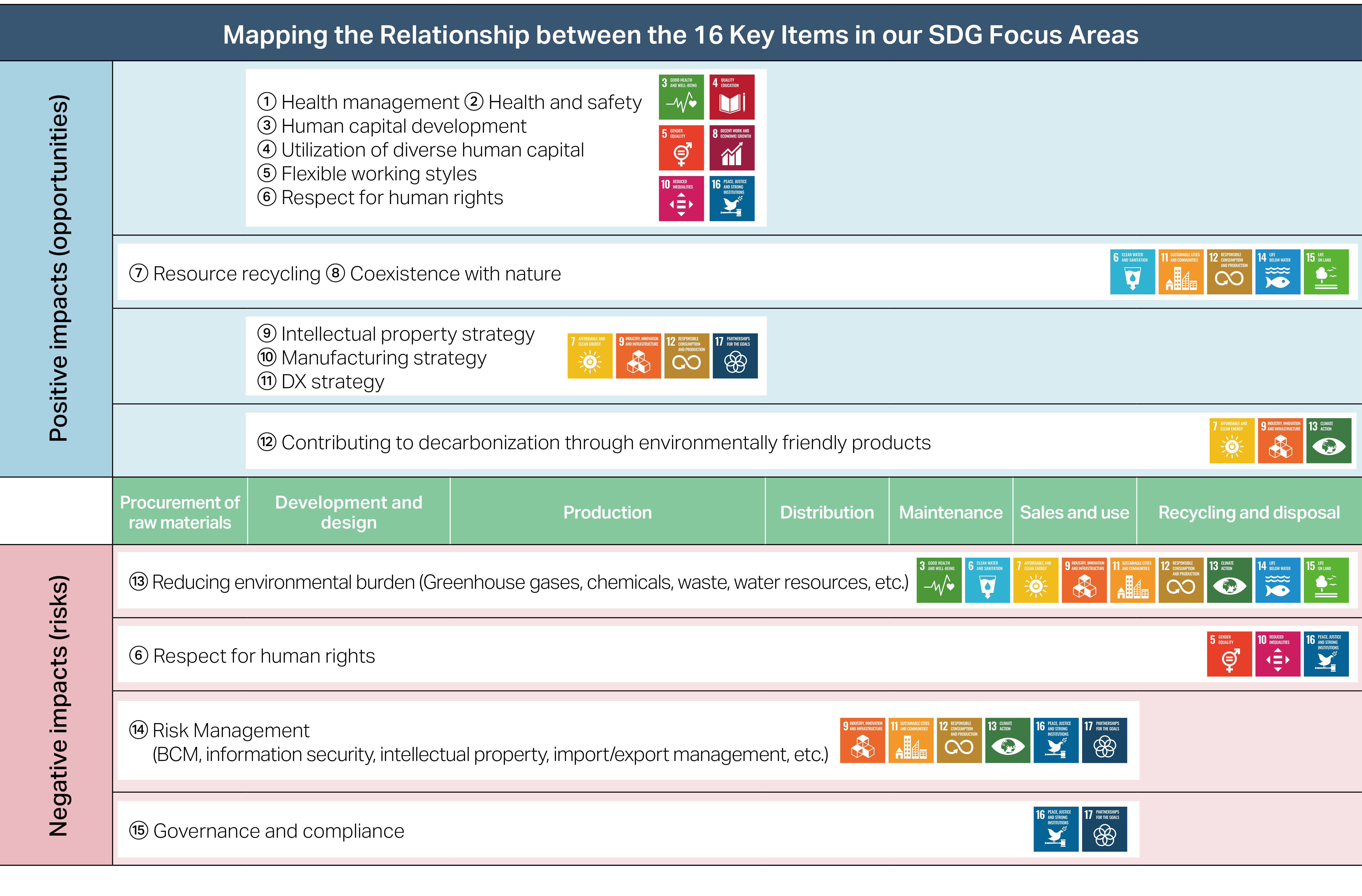
Approach to Materiality
The Shindengen Group promotes 16 company-wide sustainability initiatives, aiming to reduce and avoid significant management risks while striving to enhance corporate value through the expansion of business opportunities.
①Management Foundation Areas Enabling Sustainable Growth (6 Initiatives)
②Areas of Contribution to a Sustainable Society (10 Initiatives)